Teaching English learners can be challenging. Teachers are focused on meaning content goals with teaching language skills as well. Because classroom teachers as well as English language learner teachers need classroom support, this blog was created to give teachers in Laurens County tools to further there knowledge of teaching our growing population of English learners. I wish each of you a fantastic school year. Here we go….
Currently in Laurens County we serve 130+ students who speak seven different languages: Spanish, Chinese, Japanese, Tagalog, Vietnamese, Gujarati, and Hindi. Each school has a subgroup of English learners and an English language teacher assigned to the building. we utilize push-in, pull-out, and scheduled models of EL instruction.
As we kick off the FY 20 school, I wanted to provide each of you with some resources that will be helpful to supporting you in the classroom. We will go over some of these resources in more depth as the year progresses.
The first link that I would like to point you to is our English Learner resource page. This site is loaded with information that can help guide you in planning instructional activities for your students. In the next post, I will give you information on the Can Do Descriptors and how to weave them into your lesson planning. https://padlet.com/lawilliamson6/ELResources
Welcome back to school sweet friends and colleagues. Seeing everyone excited to get this year going has been exciting. I love the “whatever it takes” attitude to get our students, especially our English learners, back to school. As educators, we are anticipating a “different kind” of school year and positive change can happen in the midst of uncertain times. As we begin this year, let’s keep in mind that our English learners have most likely been greatly submerged in their home language since mid March. We know that language acquisition skills have probably decreased and we are ready for the challenge of growing social and academic language this year more so than ever.
A few strategies as we get the year started:
Maintain frequent home communication “whatever it takes.” At the district level we have set up an English learner parent Facebook group for our monthly parent academies, newsletters, and community news. We also have a Remind 101 group to get information to our English learner families quickly. At the ESOL classroom level, our teachers have Google Classrooms for all students who are English learners as well as Remind 101. Staying in touch with our English learner parents is a strong focus this year district wide.
Translate when needed but do not make it a habit. Our goal is to get student’s reading and speaking English “whatever it takes.” We have many tools in our toolboxes for that.
Encourage Writing – All kinds. If the student needs to write in their native language and translate it – perfect. If the student needs a sentence stem – perfect. If the student needs a graphic organizer- perfect. Use rubrics if possible. The WIDA writing rubrics are an invaluable tool.
This is an article that I recently ran across that is valuable for helping our English learners of all ages and all proficiency levels select reading material. I hope you will download it and enjoy it as much as I did. I also hope it helps you to help your English learners not be frustrated by reading.
Many of our English learners have scores between a 3.3-4.8 proficiency level on ACCESS testing and we sometimes assume that these El’s have a good grasp on written language however, this myth couldn’t be further from fact. English learners need support in language even upon their exit for English language program services. As content teachers, there are research based ways that we can offer English learners written language support and help them to grow as writers.
Write and write often – Plan purposeful written language lessons. This may be as simple as making a jot list about topics to write about in the future or a list of favorite foods. Getting that keyboard moving or that writing pen flowing is the first step. Often educators teach writing to Els last but jumping into writing quickly and learning reading and written language skills together is paramount.
Utilize a Writing Partner – Admittedly, I had inadvertedly missed out on implementing this strategy in my classroom but Peer Writing Partners is a powerful strategy. Students get language support from their peers and can draw upon each others strengths to produce writing pieces. Pairing this with your writer’s workshop can be even more powerful.
Technology – Utilizing tech components to help Els develop their writing skills can be very powerful. Students have access to a plethora of programs, apps, and websites to help translate, investigate and build content knowledge about a topic/skill. By integrating tech tools into students’ production of writing pieces, students with language deficits can be empowered to use written language and strengthen writing language skills. Graphic storying telling can bring words to life and for Els expressing themselves with a graphic tool as well as written English language is empowering. Storyboard That!, Powtoon, and many more useful tools can be found here: https://www.schrockguide.net/online-tools.html
Graphic Novels – I wasn’t a fan of graphic novels for a long time however recently I have discovered the power of these magical little books (lol) and the English learner. Graphics throughout the book and the story sentence structure (and even more complex sentence structure in some novels) help to build strong literacy skills for English learners. Visuals help with reading comprehension as well!
Picture Books/Mentor Texts – Middle and High school students can benefit from looking at picture books for craft and structure especially English learners in these grade bands. Giving students examples of how their writing can grow can be a meaningful tool. Excerpts from books that students analyze and discover writing crafts from helps build background knowledge for students.
Teaching writing can be refreshed and updated with these suggestions especially for English learners in the mid/upper level language proficiency bands.
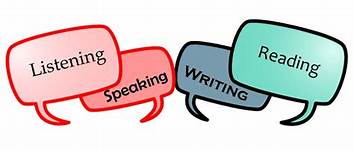
Of these four domains, the last domain to develop is writing but with English learners, writing doesn’t have to be taught last.
Learning a new language is a lengthy process. Research has proven it takes five to seven years to fully be proficient in another language. Research also tells us that writing is the last domain to develop out of listening, speaking, reading, and writing and is typically the most difficult for English learners. However our Els have to have writing skills to be successful in content classes, in the ESOL classroom, and on the ACCESS for ELLs 2.0 assessment. So how can we strengthen the writing skills of our Els?
Write… write and write daily. Copying letters and words, labeling, phrases, sentences, poorly structured sentences from day one in the ESOL and content classroom. The more exposure to writing English learners have, the stronger the students’ writing skills become.
For newcomers, copying words is expected. It is not uncommon for students with no English skills to copy words and sentences without any knowledge of their meaning. Copying sentences gives students exposure to proper sentence structure. As language progresses, writing skills progress.
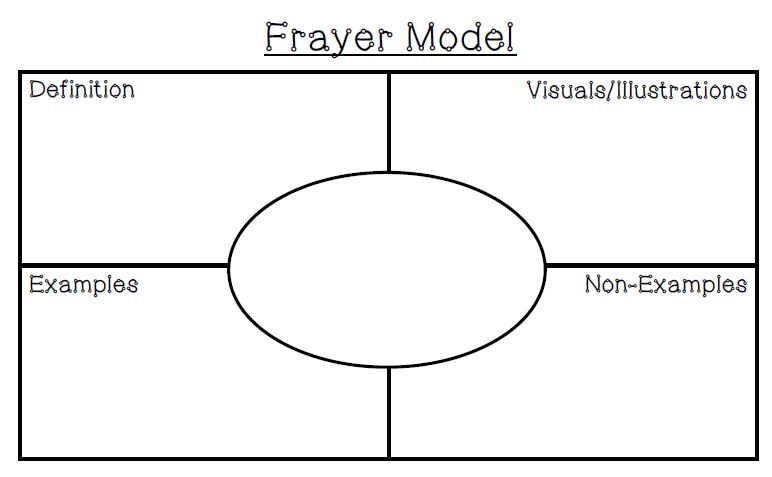
Building background knowledge around a selected writing topic and using hands-on and contextualized experiences is critical. The research as changed from pre-teaching vocabulary to giving ELs experiences with the content. Do the science experiment and teach vocabulary during and after. Students need meaningful experiences to learn language and the more hands-on the better. If students don’t have amble background knowledge on a topic, they are not able to write in depth about the topic. If specialized vocabulary is needed for a topic, the Frayer Model is an excellent tool to incorporate into lessons.
Frayer Model Template
English learners frequently have enough vocabulary and content knowledge in their native language to write but they may not have enough background knowledge found in American culture/schools, or the selected topic. As educators, we may need to close the background experience gap so that students have something concrete to write about.
Bridge Building Strategies include:
Field Trips (virtual and real life)
Simulations
Video Clips
Total Physical Response (TPR) – Using your hands to demonstrate language, talking with your hands
Demonstrations
Guest Speakers
K-W-L Charts
Anchor Charts
Anticipation Guides
Vocabulary Knowledge
Self Assessment
The key here is when planning your lessons, think carefully how you are providing ample, interactive, accessible input from English learners.
Mentor texts are a great way to build writing skills across all genres of writing. Using sentence frames build vocabulary for the English learners and give students appropriate writing patterns in which to build paragraphs. Incorporating graphic organizers can be helpful as well – especially when students have a concrete understanding of how the graphic organizers work to their advantage.
Assessing Writing
So now that my English learner has words on paper, how can I assess his/her writing fairly? Rubrics, writing conferences, and the Can Do Descriptors are all great assessment tools.
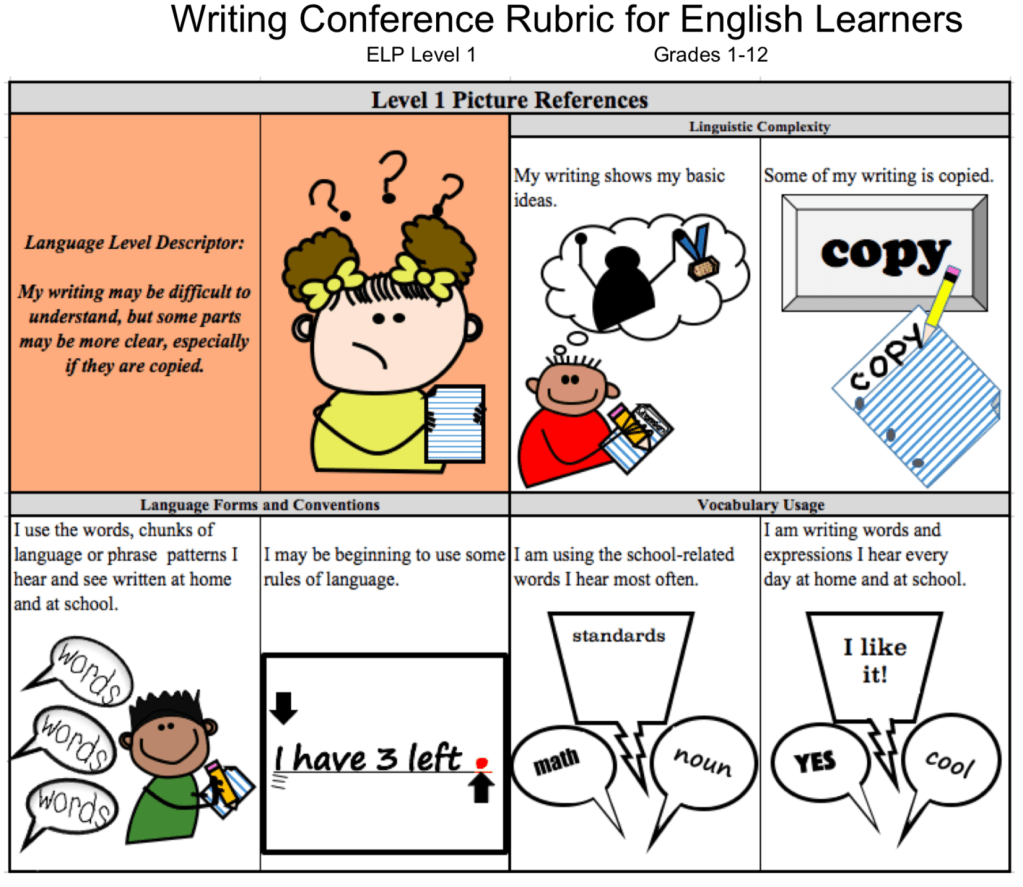
For Newcomers, this Level 1 writing rubric is a handy tool for students to see visually what the writing expectations are:
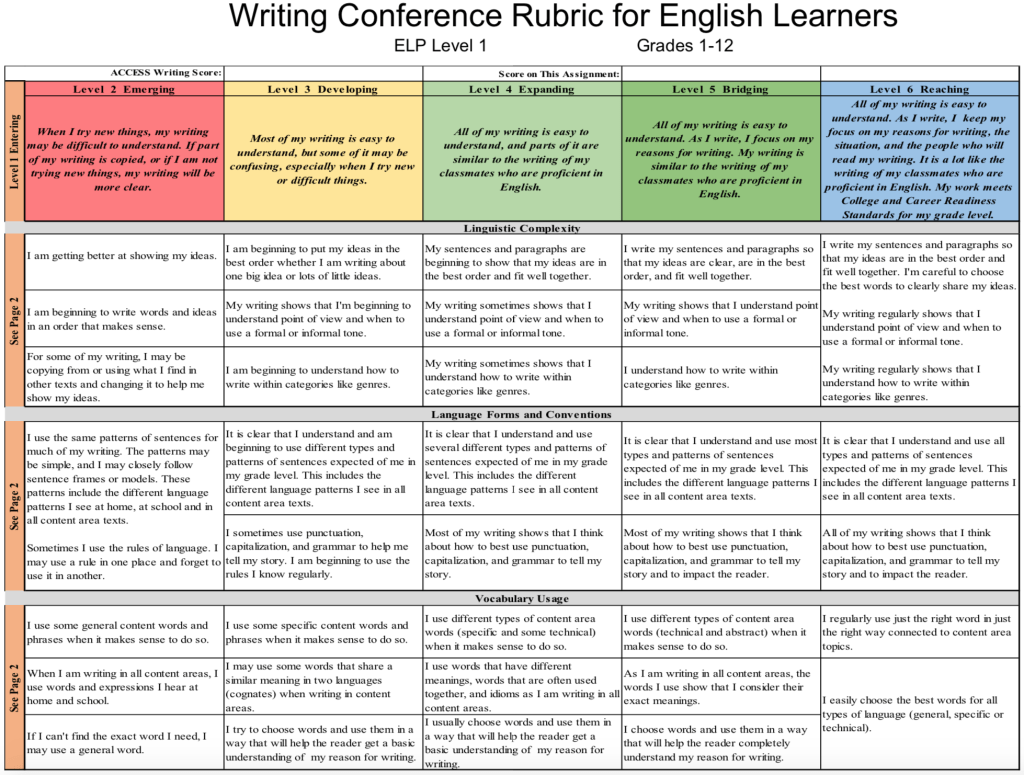
For more proficient students, writing conference rubrics paired with your students’ ACCESS scores are a great place to begin conversations for improvement in writing.
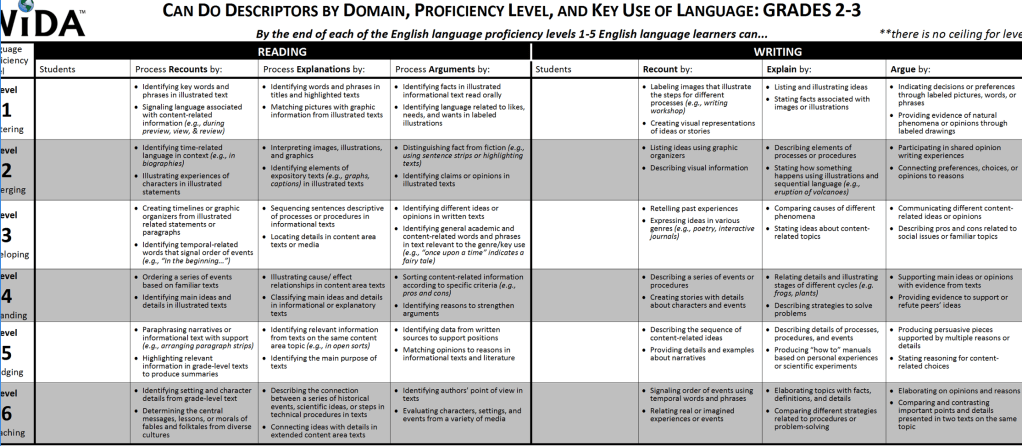
Using your grade cluster in the Can Do Descriptors Key Uses Edition writing section is another excellent way to have conversations about writing and to build on strengths that students currently have. Use the proficiency level of the student (via ACCESS score) to find the starting place for the student and build on their writing skills from that point.
Teaching writing to English learners can be challenging, fun, and rewarding. Happy Writing!!!!
If you have ESOL students in your classroom then you have probably be given information about “Can Do” descriptors and are also probably wondering what they are. Can do descriptors are designed by WIDA to help teachers understand and create language-rich, literacy-rich, and culturally appropriate classrooms and lessons. These types of classrooms are good for an learners not just English learners. These types of classrooms are engaging and work for every learner in your school but they are particularly important and essential for English learners as they learn English and academic content simultaneously.
The purpose of the Can Do descriptors is to help you know where your students are in terms of English proficient and what you can expect them to be able to do at that level (What they Can Do.) By using the Can Do descriptors teachers are able to set realistic expectations and provide appropriate learning supports for English learners in the academic classroom setting as well as ESOL classroom.
The Can Do descriptors are designed to be blended with the Georgia Standards of Excellence for your content area(s) so that students at all proficiency levels can access grade level content.
For example: A student in 2nd grade who has a proficiency level of 1.4 can listen to a book being read and then put pictures in order describing the sequence of the story and perhaps extending the lesson can write one noun for each picture. [Showing what happens next based on familiar oral stories (e.g., by pointing or drawing)]. Comparatively a 2nd grade student with a 3.6 proficiency level should be able to listen to or read a story and then identify linking words or phrases related to passage of time in speech (e.g., “on Monday” “the next day”) and as an extension by write a sequence of events about the book or create a timeline of events in the story
An 8th grade student with a 3.2 proficiency level might write an argumentative essay (or paragraph) by substantiating his/her opinion on a topic with content-related examples and evidence. Simultaneously in the same class, an 8th grade student with a 1.2 proficiency level might generate words and phrases that represent opinions (e.g., “I think…”). In both examples, the same content standard is being addressed but the standard is made accessible to the English learner.
The Can Do descriptors were designed to create and implement the uses of the students strengths and assets to build English proficiency while gaining access to academic content. Visit the Can Do descriptors for your grade level below. If you are a pre-K teacher, you will find some early Can Do Descriptors here as well.
I hope each of you had a magical, exciting first day back to school with students. One of the first steps in teaching English learners is building a relationship that ensures trust and safety between the students, schools, and families. Establishing culturally rich classrooms for all of our students is a great place to start. As a country, we have become an anti-immigrant society and our students often sense that tension. The term English learner doesn’t automatically mean that our students are “undocumented immigrants” most of our English learner population actually are US born and raised. Building culturally responsive classrooms is the best place to start changing this mindset.
As educators we are all tasked with assuming responsibility for the education of English learners. Helping these students succeed is the job of all teachers – not just the ESOL teacher. Learning social language comes naturally but learning academic language can be a challenging feat. English learners are developing literacy skills in each content area in their second language as the simultaneously learn, comprehend, and apply content area concepts through their second language (TESOL, 2018). They are doing double the work: learning English and learning content but they don’t have the luxury of double the time. It is critical that English learners maximize the time learning both English and content and that can only happen when we, as their teachers, target both areas through content and language objectives. (More about this to come in a future blog)
To build culturally responsive classrooms we can:
respect, affirm, and promote students’ home languages and cultural knowledge and experiences as resources;
celebrate multilingualism and diversity
help prepare students to be global citizens
Our goal is not to force English on them and cause them to lose literacy in their native language but to learn English while having opportunities to maintain and further develop their own language and be a part of a community that respects all cultures.
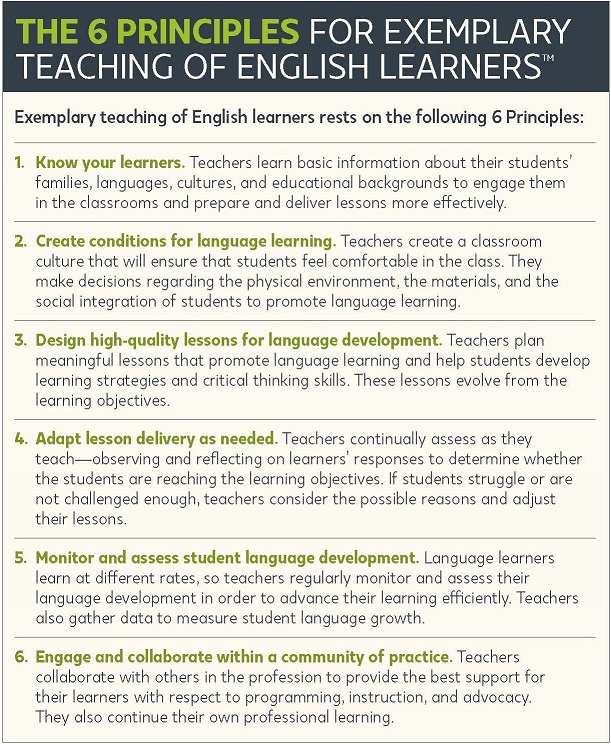
Throughout this year, I will share strategies with you from a wonderful resource The 6 Principles for Exemplary Teaching of English learners: Grades K-12 written by TESOL Press. These principles are not new concepts but build on the findings of several decades of research on second language acquisition and language teaching (TESOL, 2018). I hope you find this information helpful in your classroom and take away information and strategies that you can use to teach language through content. I also hope you will take a peak at these principles and take a few minutes to watch the video below. #LoveFirstTeachSecond
The 6 Principles for Exemplary Teaching of English Learners: Grades K-12
TESOL International Association (TESOL). 2018. The 6 principles for exemplary teaching of English learners: Grades K-12. Alexandria, VA: Author.
Welcome Laurens County teachers. My name is Ashlyn Williamson and I have been an ESOL teacher/program coordinator in Laurens County for the past five school terms. Twenty years ago, I began my teaching career as a Special Education teacher with an emphasis in Learning Disabilities and after ten years in the Special Education and Early Childhood Education worlds, became certified to teach English learners. Over the next ten years, I would grow in my knowledge of world languages and cultures. In 2015, I came to Laurens County schools and have enjoyed watching our English learner population bloom from 35 students with two ESOL teachers to over 130 students served by 8 amazing ESOL teachers.I am currently pursuing an Ed.S degree in Reading through Georgia Southern University (Triple Eagle degree coming May 2020). Our students are my priority. Our program goal is to get each student proficient in English within 4 years of entering our schools. We focus our instruction on listening, speaking, reading, and writing. It is my intent to equip content teachers and English language learner teachers with tools that are useful in the classroom to improve the language proficiency of our students. Come join in the journey of providing excellent educational opportunities to our English learners.

 English Learners in Laurens County