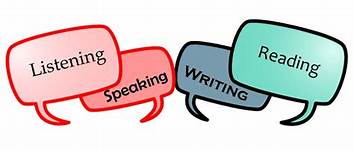
Learning a new language is a lengthy process. Research has proven it takes five to seven years to fully be proficient in another language. Research also tells us that writing is the last domain to develop out of listening, speaking, reading, and writing and is typically the most difficult for English learners. However our Els have to have writing skills to be successful in content classes, in the ESOL classroom, and on the ACCESS for ELLs 2.0 assessment. So how can we strengthen the writing skills of our Els?
Write… write and write daily. Copying letters and words, labeling, phrases, sentences, poorly structured sentences from day one in the ESOL and content classroom. The more exposure to writing English learners have, the stronger the students’ writing skills become.
For newcomers, copying words is expected. It is not uncommon for students with no English skills to copy words and sentences without any knowledge of their meaning. Copying sentences gives students exposure to proper sentence structure. As language progresses, writing skills progress.
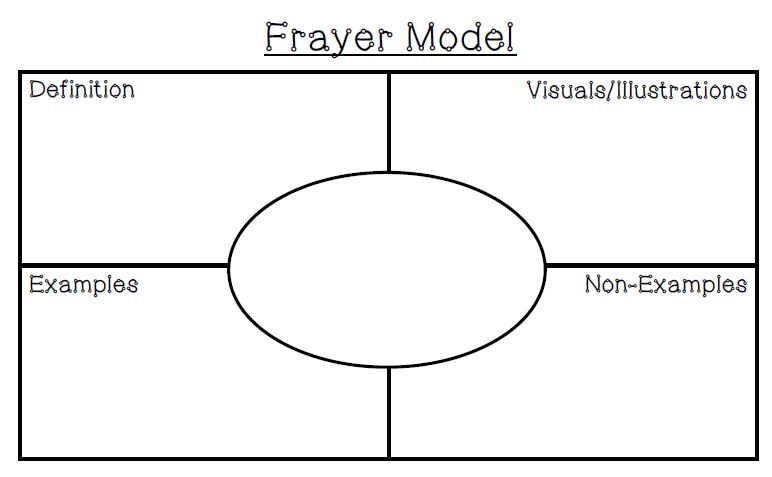
Building background knowledge around a selected writing topic and using hands-on and contextualized experiences is critical. The research as changed from pre-teaching vocabulary to giving ELs experiences with the content. Do the science experiment and teach vocabulary during and after. Students need meaningful experiences to learn language and the more hands-on the better. If students don’t have amble background knowledge on a topic, they are not able to write in depth about the topic. If specialized vocabulary is needed for a topic, the Frayer Model is an excellent tool to incorporate into lessons.
English learners frequently have enough vocabulary and content knowledge in their native language to write but they may not have enough background knowledge found in American culture/schools, or the selected topic. As educators, we may need to close the background experience gap so that students have something concrete to write about.
Bridge Building Strategies include:
Field Trips (virtual and real life)
Simulations
Video Clips
Total Physical Response (TPR) – Using your hands to demonstrate language, talking with your hands
Demonstrations
Guest Speakers
K-W-L Charts
Anchor Charts
Anticipation Guides
Vocabulary Knowledge
Self Assessment
The key here is when planning your lessons, think carefully how you are providing ample, interactive, accessible input from English learners.
Mentor texts are a great way to build writing skills across all genres of writing. Using sentence frames build vocabulary for the English learners and give students appropriate writing patterns in which to build paragraphs. Incorporating graphic organizers can be helpful as well – especially when students have a concrete understanding of how the graphic organizers work to their advantage.
Assessing Writing
So now that my English learner has words on paper, how can I assess his/her writing fairly? Rubrics, writing conferences, and the Can Do Descriptors are all great assessment tools.
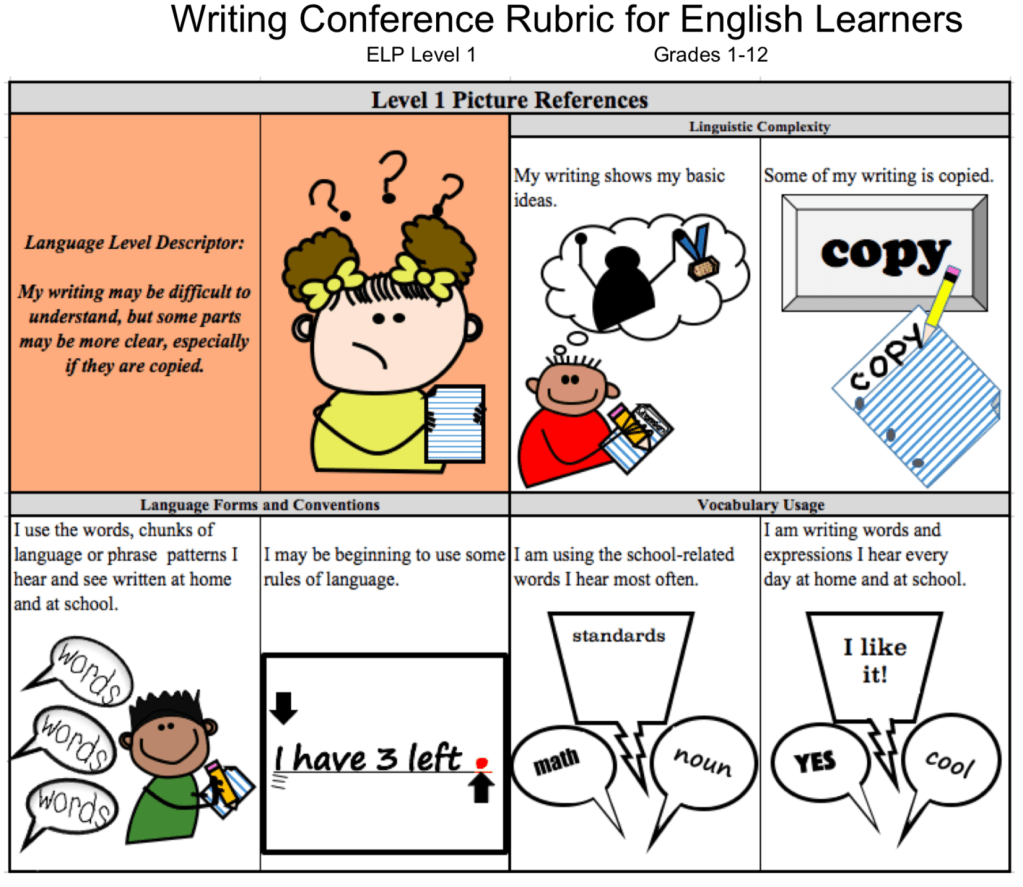
For Newcomers, this Level 1 writing rubric is a handy tool for students to see visually what the writing expectations are:
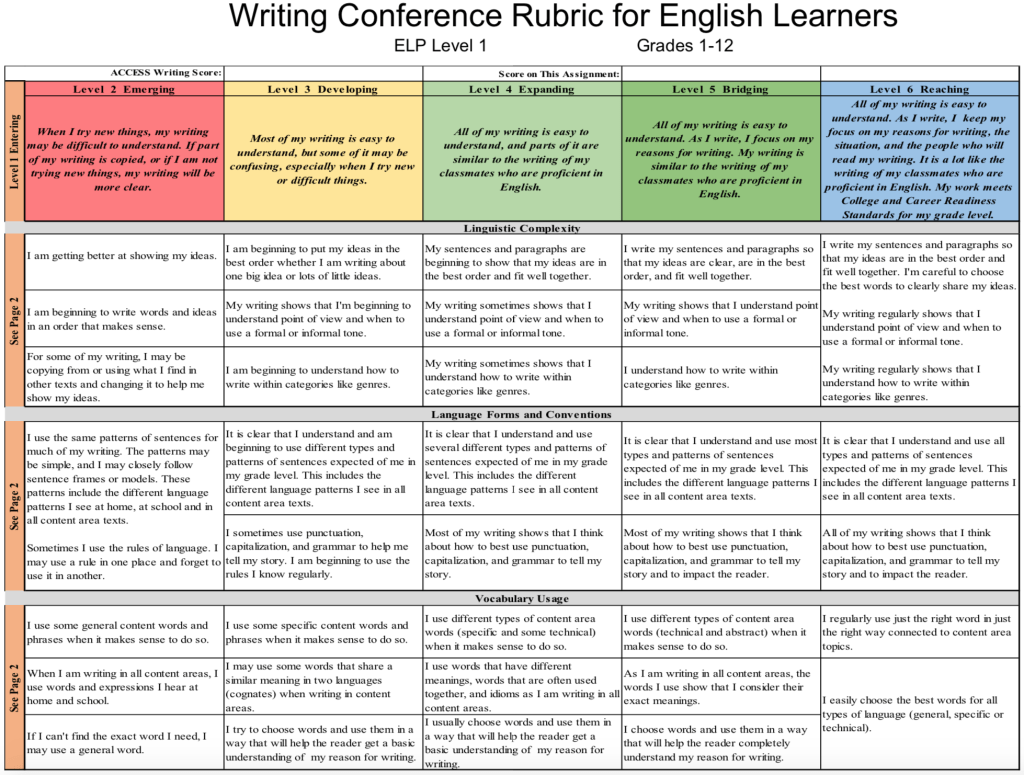
For more proficient students, writing conference rubrics paired with your students’ ACCESS scores are a great place to begin conversations for improvement in writing.
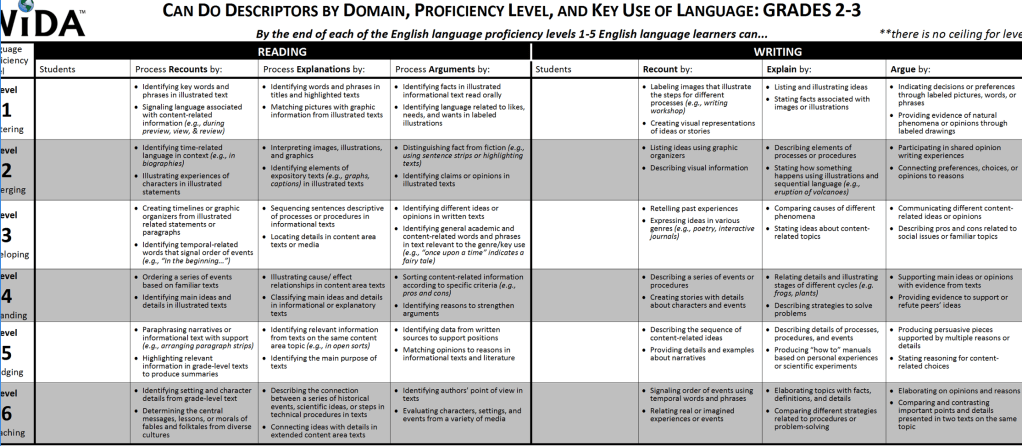
Using your grade cluster in the Can Do Descriptors Key Uses Edition writing section is another excellent way to have conversations about writing and to build on strengths that students currently have. Use the proficiency level of the student (via ACCESS score) to find the starting place for the student and build on their writing skills from that point.
Teaching writing to English learners can be challenging, fun, and rewarding. Happy Writing!!!!

 English Learners in Laurens County